Hook Neural Book a strategy call
Case studies

Real brands. Real numbers. Here's exactly how.

Start with our own DTC portfolio and four ecom brands, with the real numbers on each. Then watch the same system walk into a med spa and an AI software company. Then the biggest AI communities asking us to come teach it. Different industries. Same engine. Tap any card for the full breakdown. Names removed.

8.76x ROAS $42k → $371k Taught in the biggest AI rooms $10.7M on our own brands
Book a strategy call

20-minute strategy call. No pitch. We'll tell you straight if it's not a match.

Grab a time
Loading calendar...
Our own DTC brand portfolio (home decor, fitness, beauty)

$10.7M in lifetime sales across our own brands. 50M+ views on a single video. Every dollar of it our own money, spent before we ran a cent for a client.

Not a client. This one's us. One system, eight years, refined on our own money before a cent of it ran for a client. That's what "we never learn on clients" actually means.

$10.7M lifetime sales 50M+ views on one video 100M+ total views
See exactly what we didHide the breakdown
Who this is

Not a client. Us.

We started in 2019 dropshipping, then built a real system on top of it: research first, right page per product, test at volume. It grew across home decor, fitness, and beauty.

Every piece, we proved on our own money first. That's what "we never learn on clients" means.

What was broken

Our first store, sofa covers, was doing $100k a month on a plain product page. In 2021 we swapped it for a long sales page it never needed. Conversion went from 1.5% to 0.2% and the store was gone.

A page can kill a good product. We've made that call the wrong way with our own money, so we know exactly what it looks like.

Now we read the page before we touch the ads. On your account, before you spend a dollar. That's the part most agencies get backwards.

What we did
  • Picked the page architecture per product on purpose: a clean product page for direct-buy items, a sales page for education-heavy ones, after losing two brands to getting that one call wrong in both directions.
  • Front-loaded deep buyer research before any ad spend: their fears, their words for the problem, competitor gaps, the belief blocking the sale. That step is now our Oracle AI agents, scraping the web and handing the data back.
  • Rebuilt the fitness brand on a re-skinned, education-first sales page. The resistance-band product needed education, not a quick add-to-cart. It converted.
  • Tested creative at volume across Meta and Pinterest. One video pulled 50M+ views and the portfolio cleared 100M+ total, then turned that reach into real revenue.
  • Diagnosed conversion problems by auditing the page first, not the ad account. A beauty product with a cheap ~$0.50 CPC that still wouldn't sell proved the leak was the page, not the traffic.
  • Reinvested winners into new categories instead of betting everything on one hero product, building across home decor, fitness, and beauty.
  • Ran the same loop on every launch: research, pick the structure, build the page, build the ads, go live, test, read the data, scale what works.
The result

Our public Shopify overview: $10.7M in lifetime sales across our own brands, 100M+ views, 50M+ on one video.

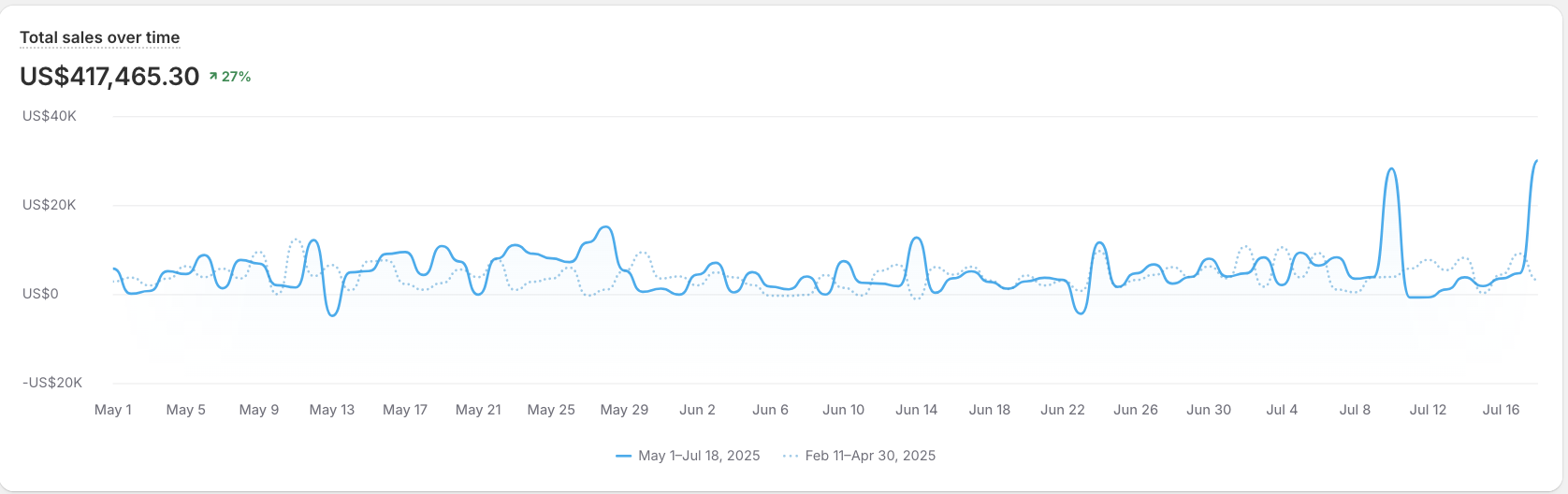
The first home decor store went zero to $100k a month. The fitness brand did roughly $417k in a year off one re-skinned, education-first page.

Every number is our own money, not a client's. We paid the tuition on our brands the hard way, so the system we hand you is already proven. That's why we show numbers, not theory.

How we scaled

Every launch ran the same loop: research, pick the right page, build, test, double down on winners.

We pushed reach on Pinterest and Meta until one video cleared 50M+ views and the brands passed 100M+ total. Once it was undeniable on our own P&L, we pointed it at clients.

That's the engine behind the other cards: 8.76x ROAS on an account ($42,406 into $371,531), a top ad set at 21.62x, a seasonal brand from $8k to $110k+ a month. Built on our own brands first.
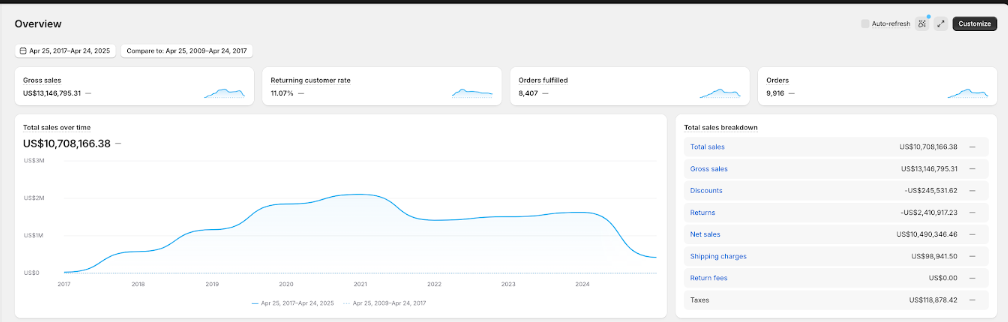
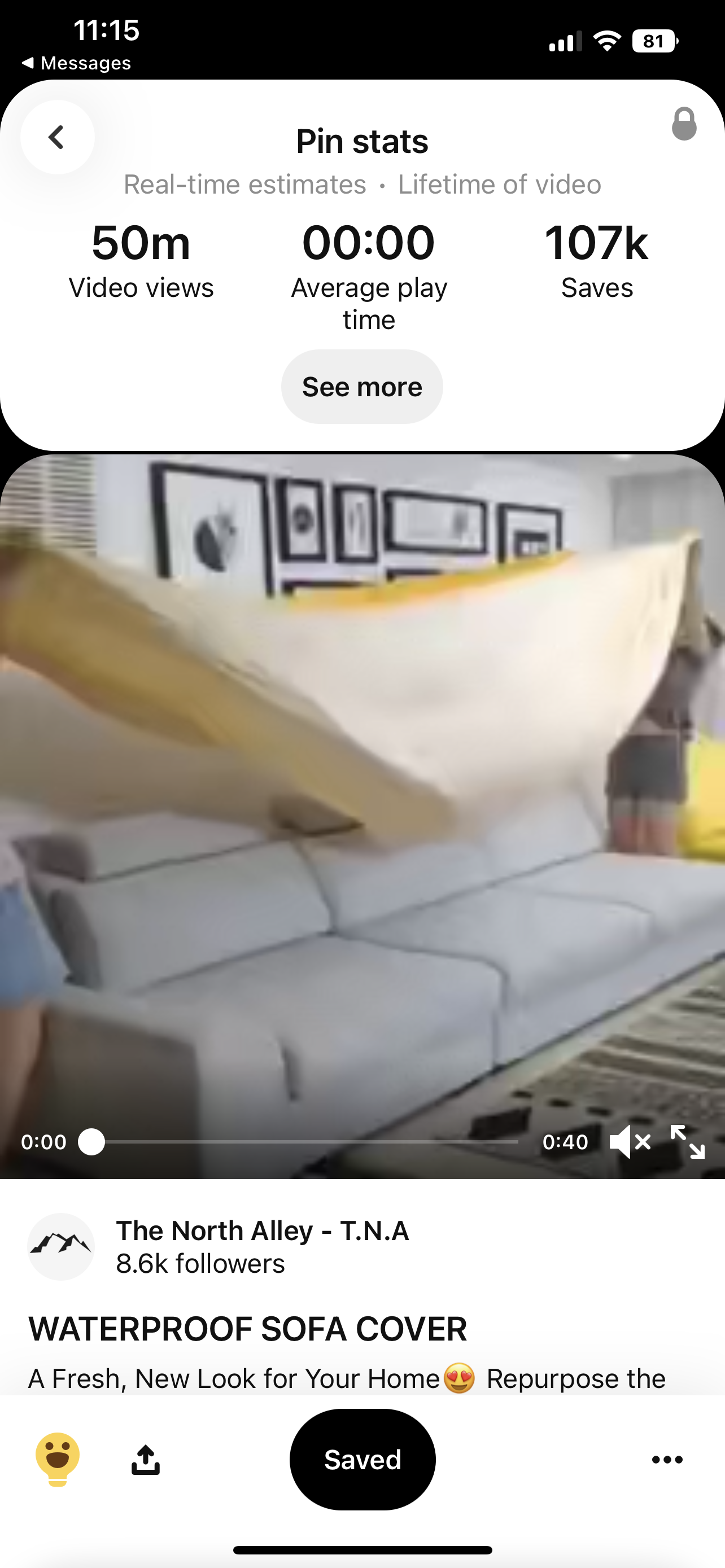
A Shopify dashboard showing 10.7 million dollars in lifetime sales across our own brands. A Pinterest pin stats screen showing 50 million video views and 107 thousand saves. A Shopify dashboard for our fitness brand showing roughly 417 thousand dollars in a single year.
Our own money, our own brands. $10,708,166 in lifetime sales, 50M+ views on a single video, and a $417k year off one re-skinned page.

"We killed a $100k a month store with the wrong page. Now we catch that mistake on your account before you ever spend."Hook Neural, on our own brands
Book a strategy call

Overlanding & outdoor gear brand, US

$42K in, $371K back. 8.76x ROAS across the account, one ad set at 21.62x.

They were funding every product, every state, and every campaign type as if they all performed the same. They didn't. We moved the money to where the returns already lived.

8.76x blended ROAS 21.62x top ad set $42,406 → $371,531 tracked
See exactly what we didHide the breakdown
Who they are

An authorized dealer on Shopify in the overlanding and outdoor space. Good catalog, real demand, a brand people search for by name.

Seasonal, so the numbers swing with the camping calendar. The product was never the problem. The ad account was.

Budget went out flat. Every product, every state, every campaign, like they all pulled the same weight.

What was broken

A few products and a handful of states carried the whole account. The spend didn't know that. It stayed spread flat across the catalog.

Worse: the single highest-ROAS campaign was getting around 6 percent of the budget.

Everything you needed was already in the numbers. The spend just hadn't caught up.

What we did
  • Took over Meta ads and rebuilt the account around what was actually converting, not an even spread across the catalog.
  • Ran a state-by-state geo read and moved budget into the handful of states already driving most of the volume.
  • Found one product line was carrying ROAS across every campaign, and leaned creative and budget into it.
  • Caught the highest-ROAS campaign getting roughly 6 percent of the budget, and moved real money toward it.
  • Took over Google Ads too, so paid search and paid social stopped fighting for the same buyer.
  • Built a Voice AI prompt for their customer-facing side, so support was covered too, not just the ad account.
The result

$42,406 in spend returned $371,531 in tracked purchases. That's 8.76x blended ROAS across the account.

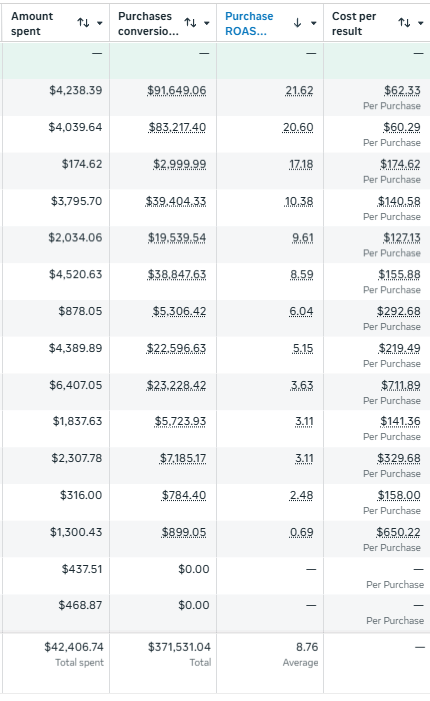
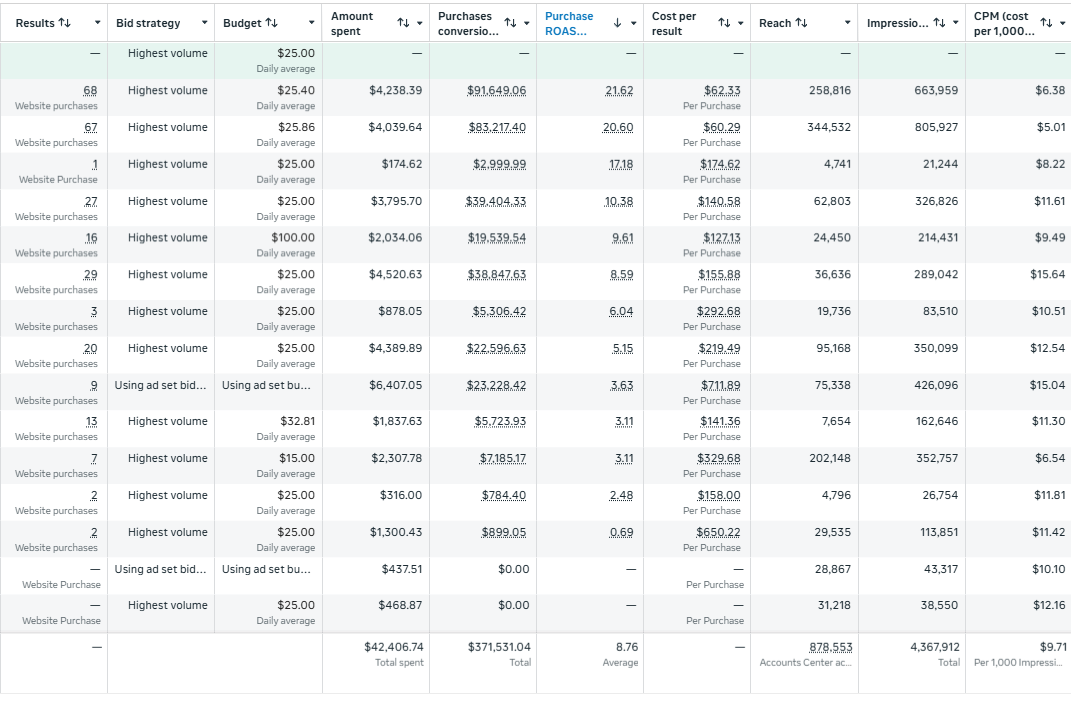
The top ad set did 21.62x, turning $4,238 into $91,649. And it wasn't one ad set carrying the rest. A second cleared 20x, another past 17x, several more between 8x and 10x.

Even as the account matured, the return held above 6x. Every number is straight off the screenshot.

How we scaled

Concentration and timing over raw budget. We pushed spend into the products, states, and campaigns already winning, then widened the account.

Google Ads came in next to Meta, and a Voice AI prompt covered the customer-facing side.

This business lives and dies with the camping season. We rode the demand curve hard in-season and pulled back off-season, instead of burning budget on months that weren't buying.

The part most accounts never get: the returns held as it scaled. Most spike once and fade.

A Meta ad account results table with the top ad set at 21.62x return on ad spend and account totals of 42,406 dollars spent and 371,531 dollars in purchase value.
Meta ad account, name removed. Top ad set 21.62x ROAS: $4,238 in, $91,649 out. Account totals $42,406 spent, $371,531 returned at 8.76x blended.
The same ad account broken out by ad set, with several ad sets above eight times return on ad spend.
The same account, by ad set. A second cleared 20x, another came in past 17x, several more in the 8x to 10x range. Read straight off the account.

"We were spending like every product and every state performed the same. They put the money where the returns already lived, and the account did 8.76x."Founder, overlanding and outdoor brand

Book a strategy call

Faith apparel, seasonal footwear, California

$8k to $110k a month in two months, on a product everyone else writes off in winter.

We stopped selling a summer sandal and started selling a holiday gift, then scaled into the December peak until they sold out of inventory.

$8k → $110k+ per month ~14x in two months Sold out of inventory
See exactly what we didHide the breakdown
Who they are

A California faith apparel brand built around a warm-weather sandal. Good product, a following that loved it. They came to us in late October, stuck at about $8k a month.

The marketing wasn't the problem. The product was fighting the calendar. They were pushing a summer item into winter, and the demand curve won every year.

What was broken

They were spending into a season that didn't want the product. A summer item pushed hard through November and December, against a demand curve that drops every year.

The ceiling sat in the calendar, not the ad account. Fresh creative can't fix a product the market isn't shopping for. The fix was a better frame, not a better ad.

What we did
  • Killed the seasonality instead of fighting it. Stopped selling a 'summer sandal' and started selling two things winter wants: a gift, and warm-weather footwear for people who never leave summer.
  • Reframed the hero product as a holiday gift, so it sold INTO the December window instead of against it. A sandal in December isn't something you wear. It's something you give.
  • Opened a second demand pool: warm-climate and vacation buyers who wear sandals year round. Targeted Florida, California, and beach geos to de-seasonalize the same SKU.
  • Read where winter demand actually lived and moved the money there. Pulled spend off generic summer-footwear intent and onto gift-buyers and warm-weather geos.
  • Leaned into the brand's faith identity for the gifting window. A faith-based gift carries a built-in occasion and a built-in audience.
  • Scaled budget hard behind the winning angle once it proved out, riding the December peak instead of bracing for it.
The result

Roughly 14x in about two months. They came in near $8k in late October and ran to $110k+ a month by December. The worst month on their calendar became the biggest of their year.

It didn't stall because demand dried up. It stalled because they sold out. When the warehouse caps your growth instead of the ad account, you're in a good spot.

How we scaled

Once the gift angle proved out in November, we poured budget in and widened the warm-weather and gift-buyer audiences to catch the December peak. The only reason the curve flattened was stock. At that point the next lever isn't more spend. It's inventory and forecasting.

Shopify revenue in October, the starting point near 8 thousand dollars. Shopify revenue in December, past 110 thousand dollars after the repositioning.
October, then December. Same brand, same product, after we reframed a summer sandal as a holiday gift. Name removed.

"You took the worst month of our year and made it our biggest. We sold out. I'll take that problem every December."Founder, faith apparel brand

Book a strategy call

Keto-friendly breakfast brand, US East Coast

Built their DTC paid channel from zero. Advertorials ran 4.32x to 15x ROAS, and one creative held as a top performer for nearly three years.

No paid acquisition system existed. We led with credentialed-creator advertorials and built winners that actually held instead of the constant-refresh treadmill.

4.32x–15x ROAS ~3 years one creative held 272 retail doors
See exactly what we didHide the breakdown
Who they are

A keto-friendly breakfast brand on the US East Coast. Oatmeal cups and protein shakes, premium, clean label.

The founder wasn't a first-timer. 20-plus years in natural foods, one brand already run 5x to acquisition. The product was good, retail was growing, and Amazon and brick-and-mortar paid for themselves.

One channel wasn't pulling its weight: Shopify DTC had no real paid acquisition at all. They came to us in October 2023 to build that engine from zero.

What was broken

Shopify was the channel meant to scale, and it was dead weight. No paid acquisition, thin repeat purchase, low AOV. Retail and marketplace carried themselves, which masked the gap.

This buyer is hard. She doesn't buy lifestyle hype. She reads macros and label before she reads a story, and she needs permission to eat a food she's felt guilty about for years.

Get that voice wrong and no amount of spend works.

What we did
  • Built the paid Meta channel from a standing start: Advantage+ prospecting, interest and lookalike testing, and a 365-day retargeting audience.
  • Led with proof, not story. Made a credentialed dietitian-creator advertorial the lead format (4.32x ROAS at a $14 CPA), then widened the roster of credentialed creators instead of chasing new gimmicks.
  • Engineered durable evergreen winners. One creative held as a top performer for nearly three years straight, which almost no DTC brand pulls off with a single asset.
  • Ran a free-pouch giveaway as the front-end hook: 2 to 3x conversion lift, 6.2% CR at a $50 AOV.
  • Restructured the offer for paid traffic: a 6 / 12 / 24 / 48-pack ladder, hid the 6-pack from paid, held the 12-pack price, and stacked bonuses instead of discounts because this base is affluent and discount-proof.
  • Compounded paid with owned channels: built nurture flows against a 7,000-name email list, plus SMS and influencer outreach.
  • Mined the buyer's own language at scale: a 37,867-word dossier, ~1,400 deduped customer quotes across 32 channels, distilled into 18 tested angles and 36 ready-to-test concepts. That drove the creative calls, which creator, which claim, which permission line.
  • Managed the strategic pause like owners, not order-takers: cleaned the ad account, cut the bleeders, and kept the proven winners staged for the next launch.
The result

We built the DTC paid channel from nothing, and the winners held. The dietitian-advertorial playbook repeated: 4.32x ROAS at a $14 CPA on the lead creator, 6.76x and 15x on creator-retargeting.

One evergreen creative stayed a top performer for nearly three years, not the constant-refresh treadmill most brands burn cash on. The free-pouch hook lifted conversion 2 to 3x and held a 6.2% CR at a $50 AOV.

Underneath it: 272 retail doors across the East Coast and Mid-Atlantic, 168 inside a national natural-grocery chain, a 7,000-name email list, a 1,000-person SMS list. 2025 revenue hit $350k, up 35% year over year.

The relationship has run since October 2023, now on a mutual pause for a reformulation, with re-engagement in flight.

How we scaled

We scaled on the numbers. Once the dietitian-advertorial format proved out, we replicated it across more credentialed creators instead of reinventing.

The retargeting stack compounded: the 365-day audience plus creator retargeting hit 6.76x and 15x, so prospecting kept feeding a high-ROAS back end. On a discount-proof base we protected margin by stacking bonuses, not cutting price. And we let winners run for years.

Then the unglamorous part. When cash got tight and a reformulation was coming, we paused cleanly instead of spending to look busy. We kept the proven creatives staged and used the downtime to build the arsenal, the 37,867-word dossier, 18 angles, 36 concepts, so the next launch starts loaded.

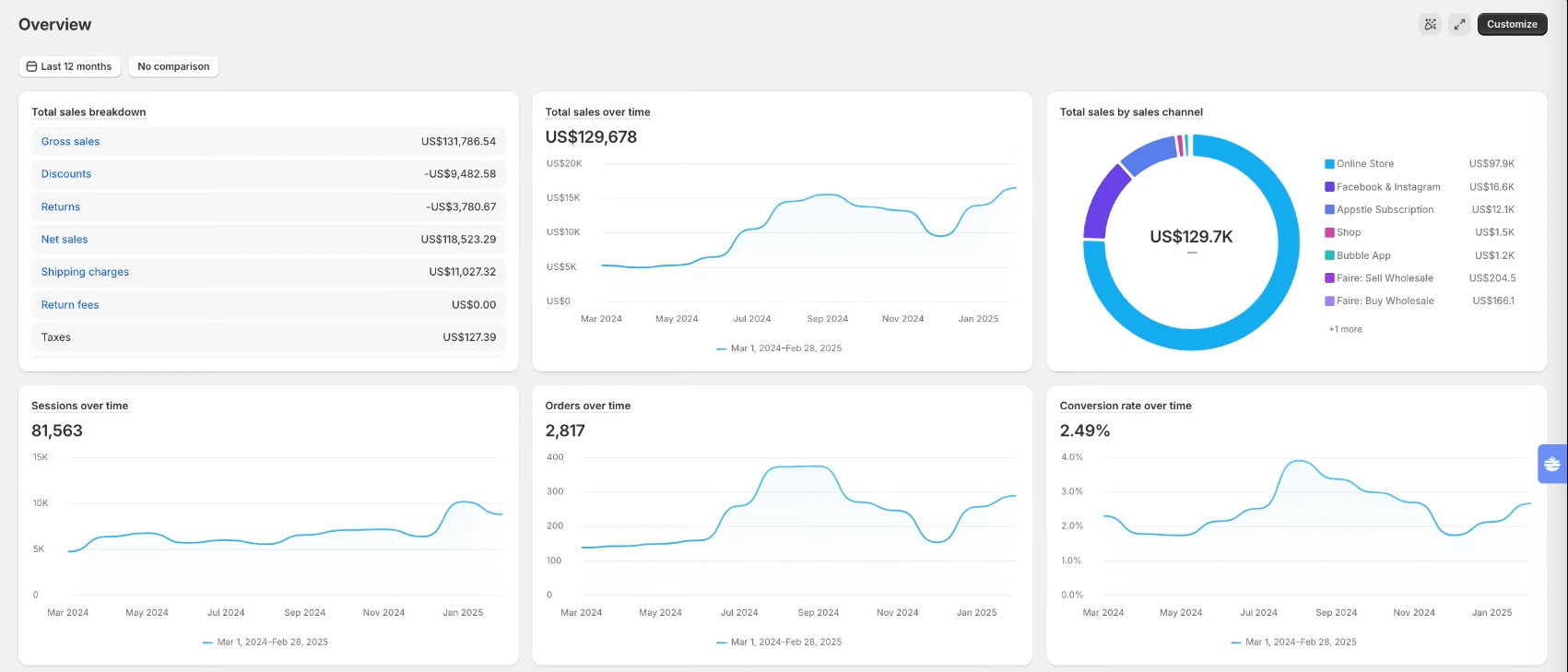
A Shopify twelve-month overview dashboard for the DTC channel, showing total sales over time, sessions, orders, and conversion rate.
The DTC channel we built from a standing start. Twelve-month Shopify overview, name removed.

"They built our DTC channel from zero and ran it like owners, not order-takers. When the smart move was to pause and reload instead of keep spending, they made that call too."Founder, keto-friendly breakfast brand

Book a strategy call

Women's hockey apparel, new brand launch

New brand, no audience, no pixel, no proof. We validated it before a dollar went live, and it launched profitable in week one.

We dry-tested every design with cheap engagement ads before the store was even finished, so the founder never had to gamble. We just scaled what already worked.

3.46x–4.41x ROAS $0.44 CPC Profitable week one
See exactly what we didHide the breakdown
Who they are

A founder we've run growth for since 2023. Our longest relationship on the roster.

The existing brand was custom team hockey jerseys. Solid, but the creative had gone stale and leads had slowed.

The bigger swing was a new second line: apparel for women who play hockey, not women who watch it. Nobody had claimed that buyer.

The catch: the new brand started from zero. No store, no pixel, no audience, no proof. And the founder was nervous about spending into the unknown.

What was broken

A new line with nothing to build on. No store, no pixel, no email list, no product photos, no proof.

Fulfillment ran off-platform, so checkout happened away from Shopify. Meta got no conversion data, which means no learning and no optimization.

The founder's words: "I'm scared to put a ton of money into this right now." So a cold launch with budget dumped in was off the table.

The white space was real but unproven. And the jersey brand needed a refresh of its own.

What we did
  • Ran a voice-of-customer dossier: roughly 502 real quotes across 6 platforms, distilled into the brief behind every ad and email. Their language, not our guesses.
  • Dry-tested every design before the store was finished. Cheap engagement ads at $3 to $5 a day let the market pick winners first. That killed the budget anxiety, so we launched on proven designs, not bets.
  • Built the launch infrastructure from a standing start: new Meta ad account plus pixel, domain verification, and a clean Shopify store with real legal pages and collection templates.
  • Rebuilt fulfillment so checkout finally happened on Shopify and Meta started receiving conversion data, which is what made optimization possible at all.
  • Generated 79 AI lifestyle photos in-house on a locked, QC'd recipe. A brand with zero photography launched looking premium, not like a dropshipper.
  • Refreshed the jersey brand with 30 new static ads built from the winning ad DNA, rendered two ways and tested head to head.
  • Edited a real customer interview into an ad. Less polish, more proof. People buy from people.
  • Built an AI sketch-video ad: the founder's real iPad design footage bookended with AI animation, so the ad shows a design coming to life.
  • Ran a Klaviyo omnichannel launch: authenticated sending domain, 10DLC-registered SMS, launch email plus text, with a simple free-shirt reply tactic to pull subscribers in.
  • Fixed the offer math: reset pricing to a workable breakeven ROAS and stripped a needless back-logo cost that was eating margin.
  • Ran a live CRO pass during launch week: a free-shipping threshold to lift AOV, decluttered cart and product pages, killed duplicate listings, plugged the add-to-cart to checkout leak. Kept the cross-sell that was quietly converting on its own.
The result

The new brand launched profitable and held there. The image ads ran above breakeven at a Meta-attributed 3.46x and 4.41x ROAS, with clicks at $0.44 CPC, well under benchmark for a cold, first-day account.

The signal showed up across multiple designs, not just one. Sales spread across multiple designs in week one, and the cross-sell converted on its own, with buyers adding designs we hadn't promoted.

The email and SMS list more than doubled in seven days, 23 to 65 subscribers, off that one free-shirt reply. The jersey brand's clicks landed right at the new-account benchmark.

Being straight about scale: this was a small, de-risked launch on roughly $88 of week-one spend and about 10 orders, a couple of them tests. The point was never dollar volume. It was proving a brand with nothing behind it could launch profitable, with real signal across products, not torch a cold budget on guesses.

How we scaled

Once the new brand proved out, we put the weight behind it. A dedicated purchase campaign for the top design on its own budget, the second winning ad kept running, and a fresh design drop every couple of weeks.

On the jersey brand, when the statics fatigued we moved to a video-first engine, interview ads and AI sketch videos, instead of more of the same.

Two brands now on retainer for the same founder, and it keeps widening as new brands come up. The pattern is the one we run everywhere: validate cheap, launch on proof, then concentrate spend on what works.

"I was scared to put real money into this. They proved every design before we launched, so I never had to gamble. I just scaled what already worked."Founder, women's hockey apparel brand

Book a strategy call

The real test

Five ecom brands is a pattern. The real test was whether any of it worked off ecom at all.

Beyond ecom

We had only ever done this in one world.

Eight years, our own brands, then client after client. All of it ecom. We had no idea if the system would hold up anywhere else.

Then I took my wife to a med spa to get her lips done. The doctor asked what I do. I told her. She asked if I could get her more patients.

"I said probably not. We knew ecom, not medical. Completely different world."What I told her

But we had the system sitting right there, so we pointed it at her world just to see. Under an hour later we had her targeting, her angles, and competitor intel for her exact specialty in her exact city.

First campaign came in at $5 a lead. The AI booked them. She never spoke to a single one until they walked in the door. So we signed more doctors.

A med spa. Aesthetic clinic. A completely different industry.

Same engine, off ecom for the first time. About 400 leads a month at $5 to $16 each, and an AI that texts every one of them inside a minute.

One aesthetic clinic became the proving ground. Paid social fed the top of the funnel, an AI setter worked every lead in 60 seconds, and when the bookings lagged we read 150 real conversations and fixed every leak. Then we made the form harder on purpose and the bookings came.

~400 leads / month $5 to $16 per lead 1,000+ leads generated 60-sec AI reply
See exactly what we didHide the breakdown
Who this is

An aesthetic clinic, cosmetic laser and skin services. Not ecom. The first time we pointed the system at a service business that fills a calendar instead of a cart. A real test of whether the engine was an ecom trick or an actual system.

What was broken

Leads were never the hard part. The follow-up was. Most agencies hand over a pile of leads and disappear. Cold leads go unanswered, front desk staff try a few, get silence, and quit. From 100 leads a normal clinic gets maybe 40 to engage, 10 to book, 5 to show. The money leaks at the human booking step, not at the lead cost.

What we did
  • Ran paid social across an offer matrix (laser hair removal, hair restoration, skin lasers, RF microneedling) and layered an AI setter on top so no lead ever sat cold.
  • Built an AI setter that texts every lead inside 60 seconds, qualifies them, handles the price and comfort objections, offers named time slots, and runs a proven 3-day sequence.
  • Made the Day 3 message a scarcity close. Leads who ignored Day 1 and Day 2 booked within hours of it.
  • Pulled 150 real lead conversations, kept the 35 with replies, read the highest-signal ones line by line, sorted who booked from who ghosted, and turned every leak into a prompt fix.
  • Added a phone-callback handler, a conditional-commitment closer, a day-of urgency handler, and a value-add reroute for soft-no leads, all from what the real conversations showed.
  • Made the lead form harder on purpose. Price up front, real qualifying questions, phone verification. That trains the algorithm to find serious buyers instead of tire-kickers.
The result

About 400 leads a month at $5 to $16 each, over 1,000 leads generated on paid social. One hero video alone pulled 256 leads at about $7 each.

Then the friction form: about 30 leads turned into 8 booked consults, roughly a 30 percent connect rate, with no early no-shows. Cost per lead moved only a few dollars, from about $7 to about $13, not the blowout everyone fears. Ads on the front, an AI that never drops a message on the back. One machine.

How it holds up

This is our most involved account, and the honest part is the story: we found the leak, read the data, and fixed it. That's the work most agencies skip. The engine that prints on ecom put real leads and booked consults into a medical calendar.

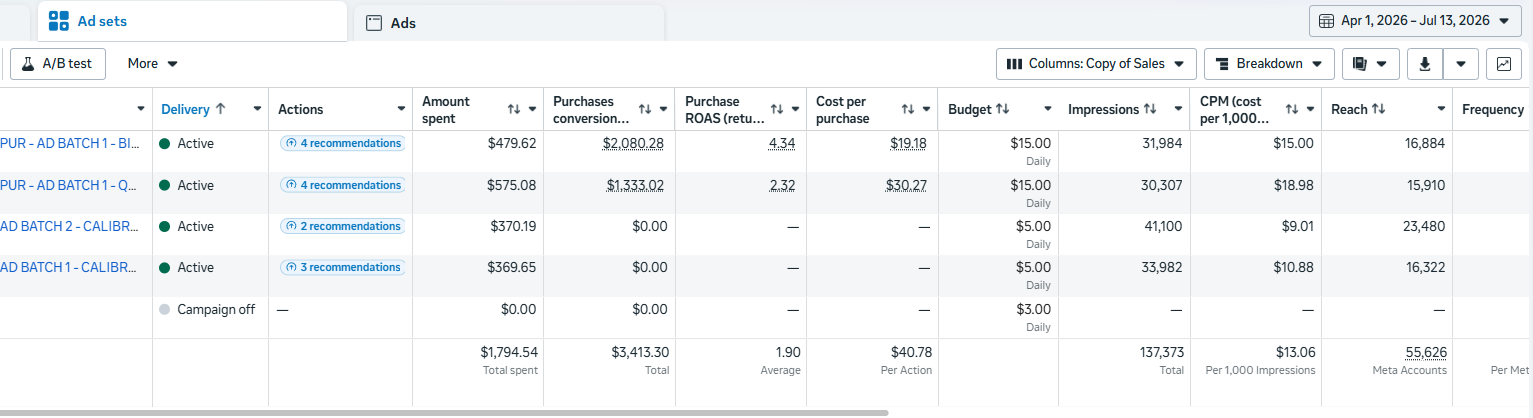
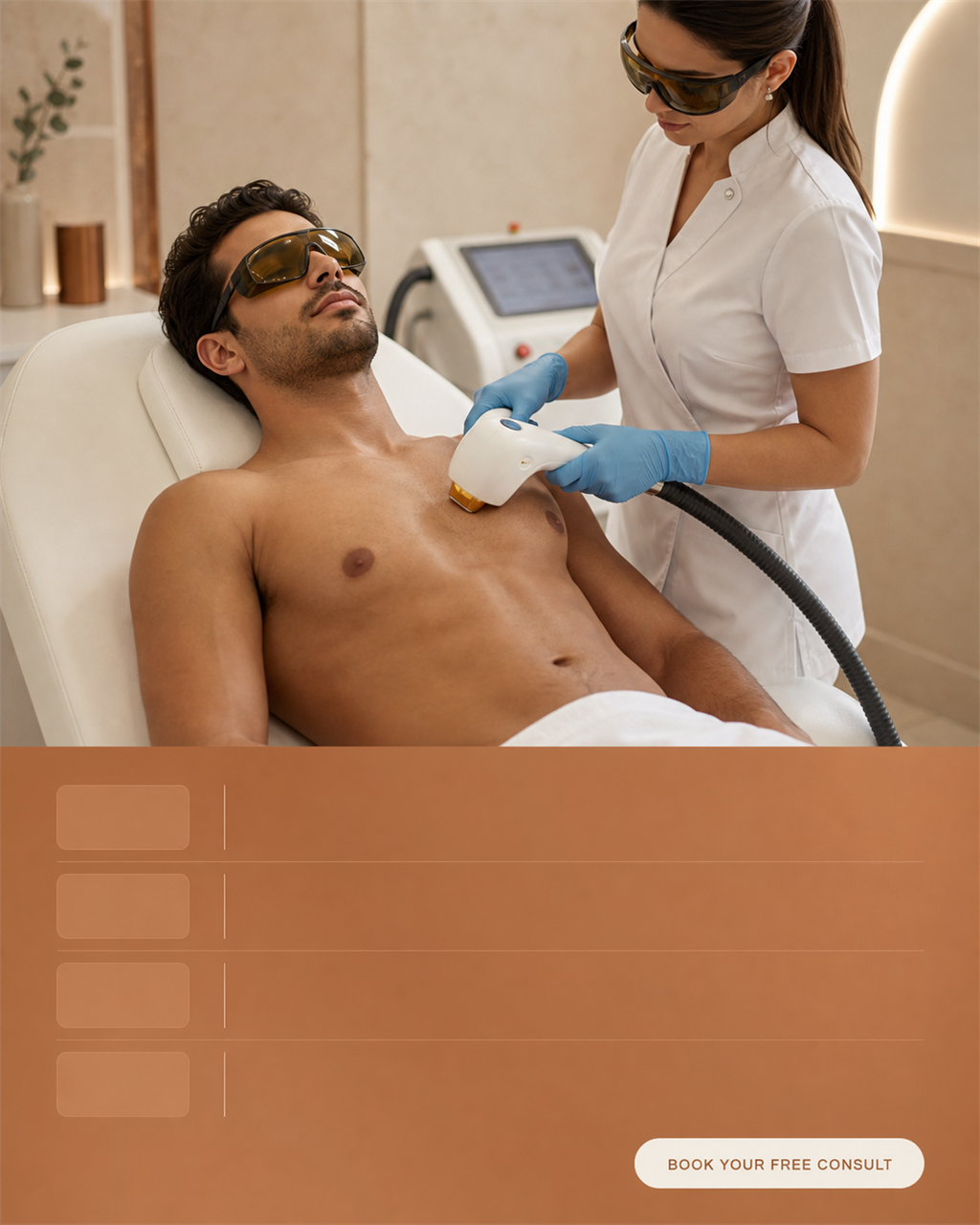
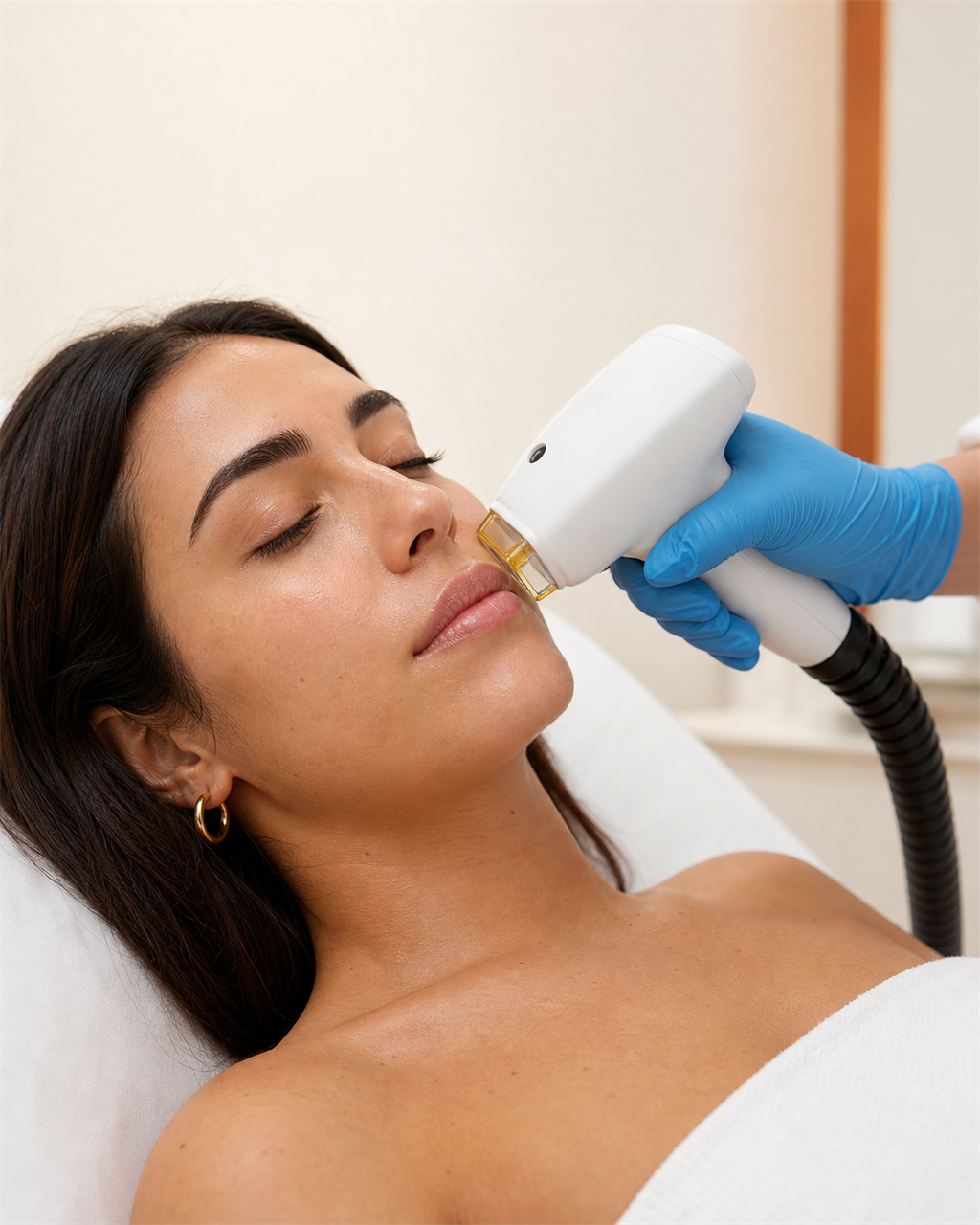
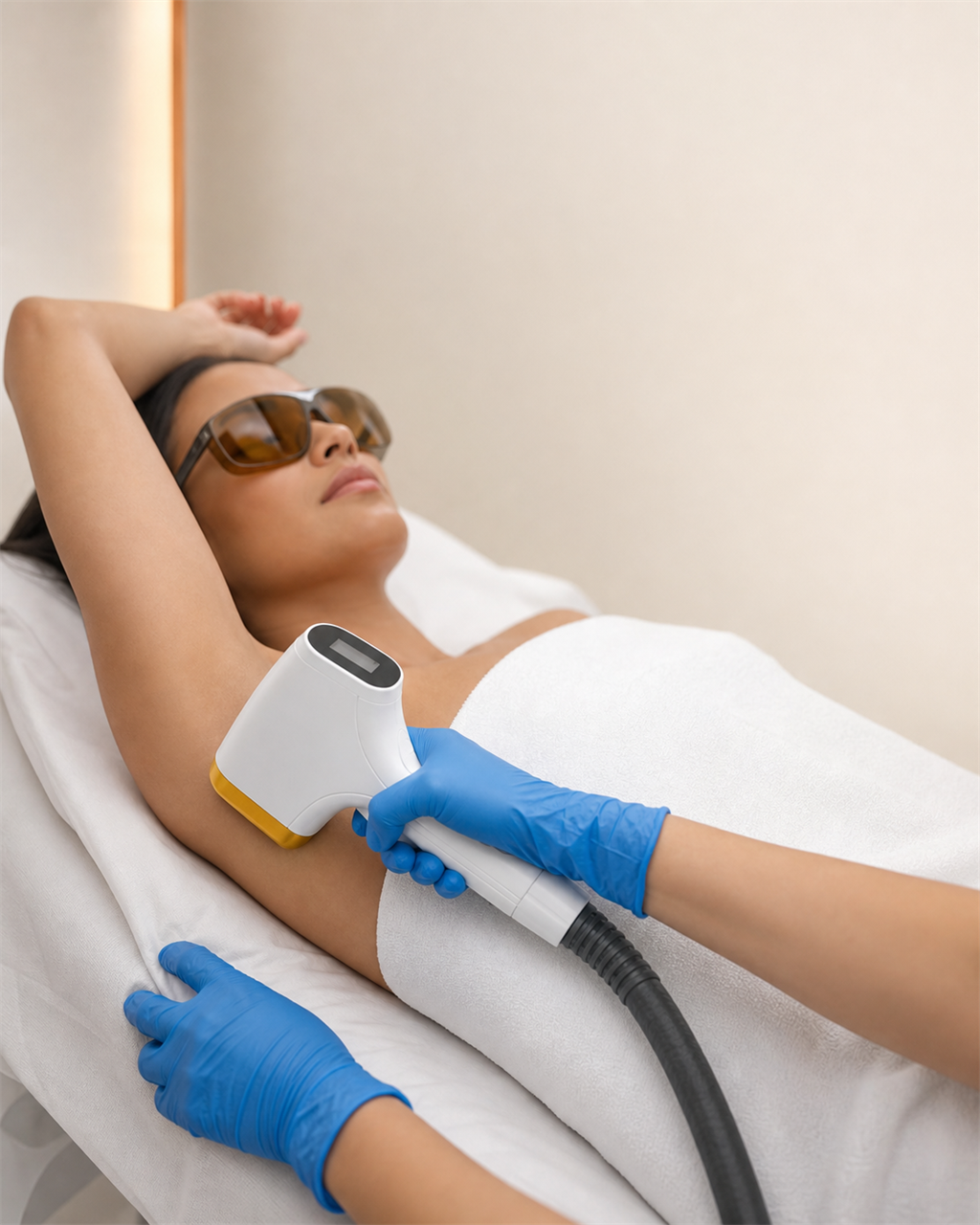
A tiered laser treatment offer static we designed and ran for the med spa. A laser offer static we designed for the med spa. A laser offer static we designed for the med spa.
The tiered laser offer we built and ran for the med spa. Our creative, our copy.

"We were getting leads and no bookings. They read the actual conversations, found where it leaked, and fixed it. Then they made the form harder and the consults showed up."Founder, aesthetic clinic

Book a strategy call

An AI software company. B2B. A cold market we said no to.

A market we said no to, then said yes. First campaign, cold: under $9 per lead and about $15 per booked call, fully automated.

He found us. He saw the ads we run for our own AI products and reached out. We told him his market was nothing like anything we had run. He kept pushing, so we pointed the research system at it. The angles were sitting right there.

under $9 per lead ~$15 per booked call first campaign cold market
See exactly what we didHide the breakdown
Who this is

An AI software company. B2B, a completely different buyer from ecom or medical. He didn't come looking for an agency. He saw the ads we were running to sell our own AI products, liked them, and reached out. Same acquisition motion this page is built on. He was pulled in, not chased.

What we said first

We told him his market was nothing like the ones we had run. It might not translate. He had already seen the numbers and kept pushing. So we ran the system on his market instead of guessing.

What we did
  • Pointed the research system at his vertical. The angles, hooks, and positioning were sitting right there.
  • Built the ad creatives, including AI avatar videos, and stood up the ad account.
  • Installed the AI setter and follow-up in his account: 24/7 conversation, qualification, booking.
  • Ran it end to end. He never spoke to a single lead until they were live on the Zoom. The AI handled everything up to the call. He just showed up and closed.
The result

First campaign, cold market: under $9 per lead and about $15 per booked call, straight off the ad account. Different industry, same system, same result.

Being straight about scale

One client, one campaign. We're showing you cost per lead and cost per booked call, not a deep multi-year case study. The point isn't the size. The point is it worked cold, on the first try, in a market we said no to.

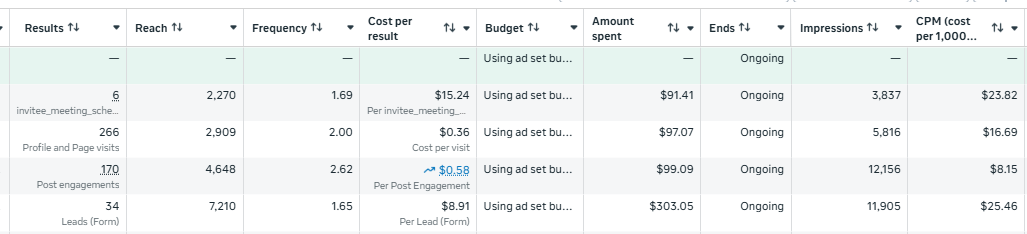
A Meta ad account for the AI software company, name removed, showing 34 leads at 8.91 dollars each and 6 booked meetings at 15.24 dollars each.
The AI software company ad account, name removed. 34 leads at $8.91 each, 6 booked calls at $15.24 each. First campaign, cold market.

"I never spoke to a lead. The AI booked them. I showed up to the Zoom and closed."Founder, AI software company

Book a strategy call

Taught inside the biggest AI communities

The biggest AI communities in the space asked us to come teach this system to their students.

We went in the same way we run everything. Prove it on ourselves first, then hand over the whole process. Nothing held back. The full research-to-ads system we run on our own brands and for our clients.

Then we watched what complete strangers did with it. People with no relationship to us, on their own accounts, first campaigns.

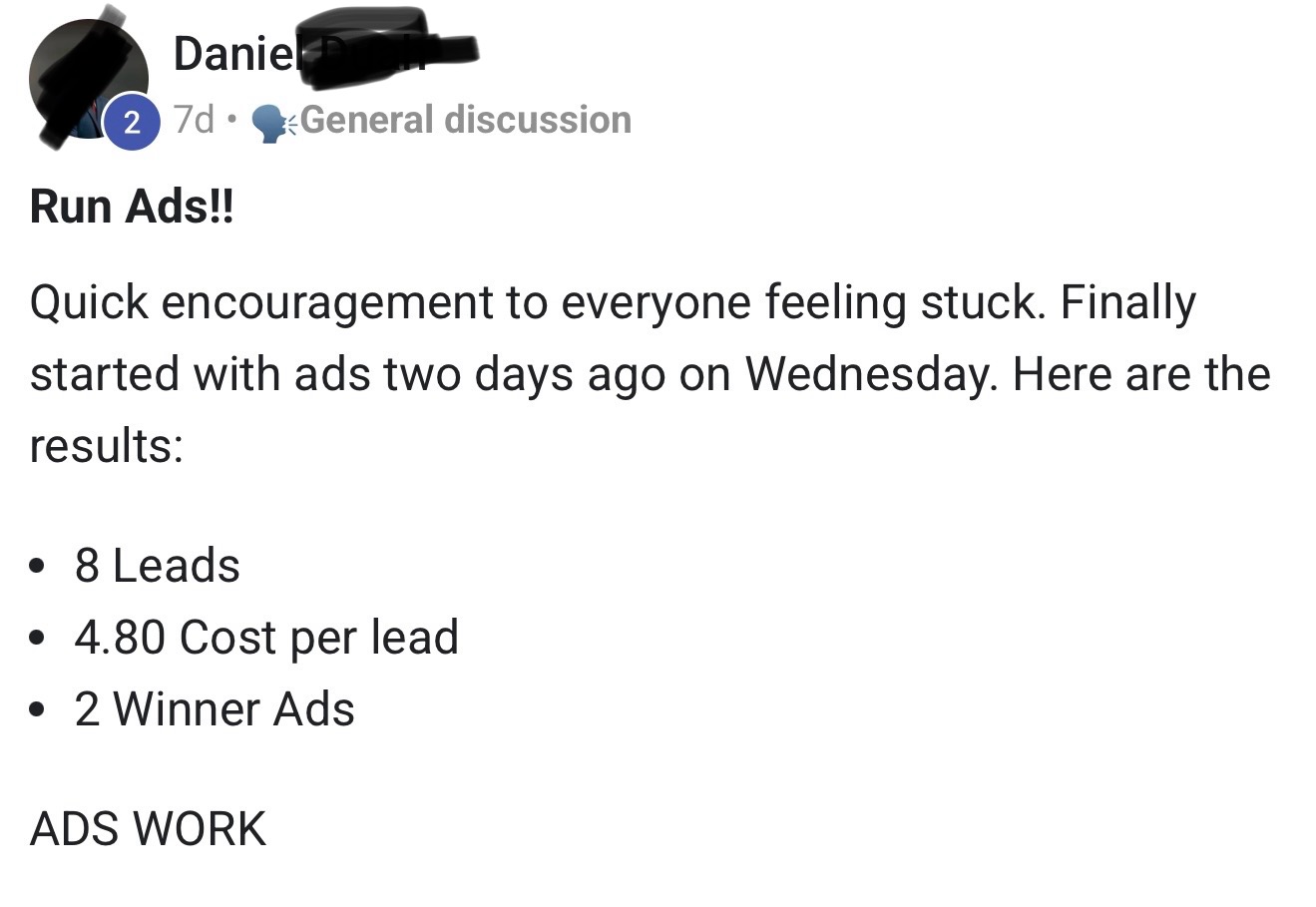
A public post two days in: 8 leads, 4.80 per lead, 2 winner ads.

Two days in, one of them posted that. Eight leads at $4.80 each. Numbers that took us months when we started.

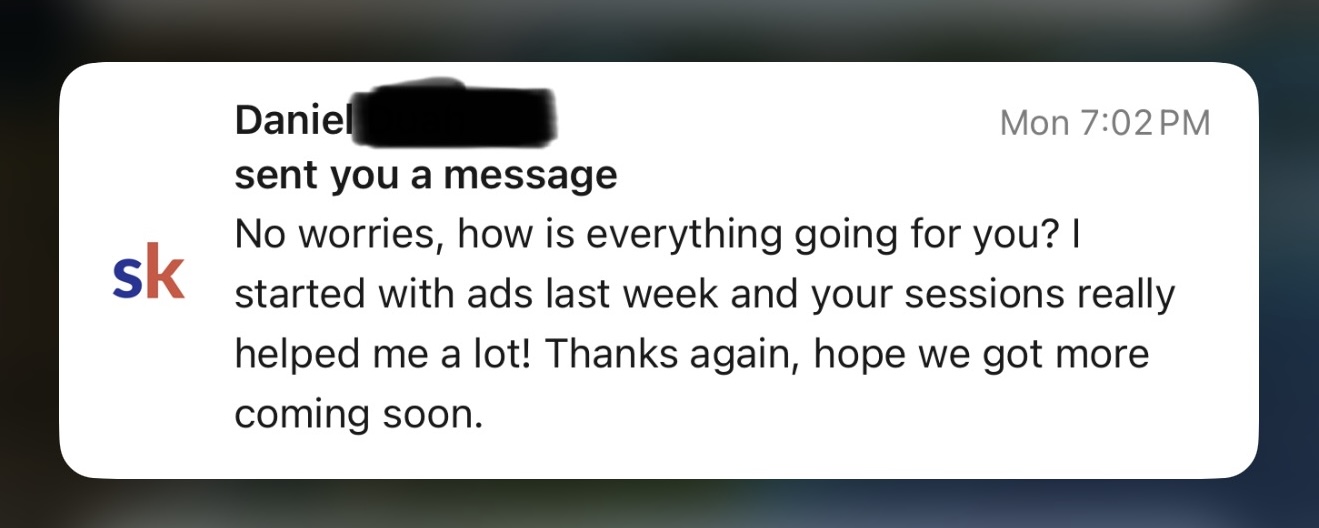
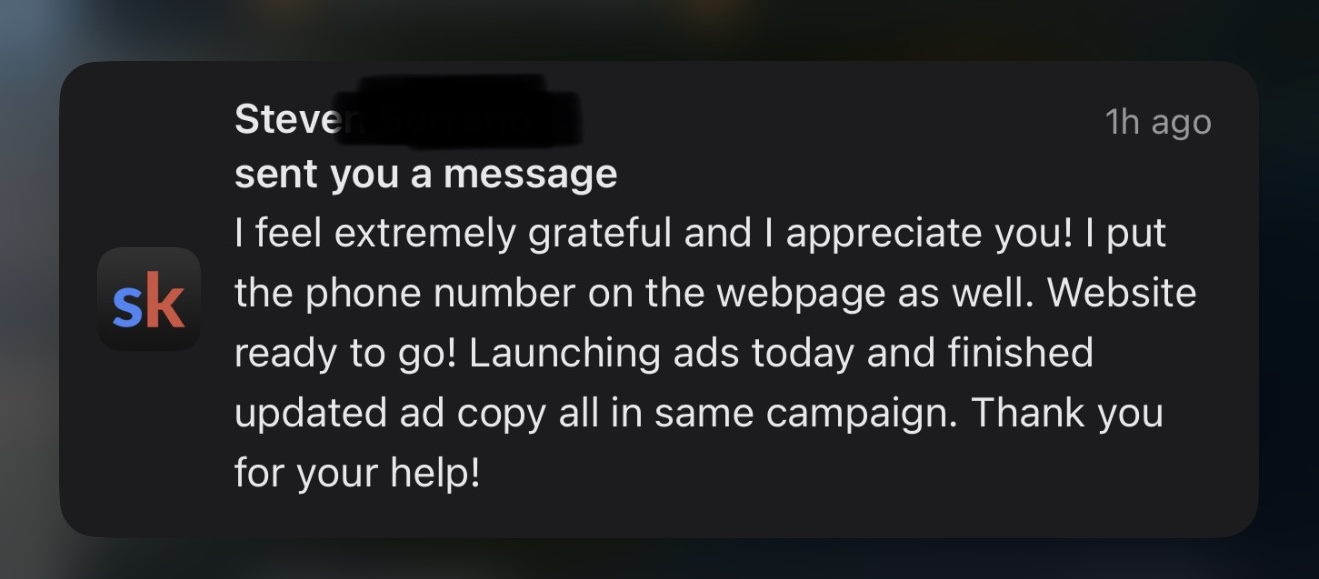
A student message thanking us.A student message thanking us.

The messages kept coming.

Here's why that matters for you. A beginner with this system beat a veteran without it. That's not a fluke. That's what a real system does. So picture it in the hands of the people who built it, aimed at your brand, run at full strength. That's what done for you is.

You don't have to learn any of this. That's the whole point of having us run it.

The through-line

Ecom. A med spa. AI software. Same fundamentals, every market. That's why the system doesn't care what industry you're in, and why we can run it in yours.

The fundamentals are so strong that strangers we taught won with it in days. That's the proof of the engine, not an invitation to go run it yourself. We don't learn on clients, we prove everything on ourselves first, then we point the whole thing at your brand and run it for you. Every card here is a number, not a theory. Book a call and we'll show you where it points for your brand.

Book a strategy call
Let's talk

Let's see if we can move your numbers.

Grab a time. It's a 20-minute strategy call, not a pitch. We'll look at your brand honestly and tell you whether our system can do what you need. If it can't, we'll tell you that too.

  • You pick a time and answer a few quick questions about your brand
  • We come prepared with real signal from your market
  • You leave with a straight read on whether we can help, fit or not
Grab a time
Loading calendar...
Same engine

Your brand next.

You can see the pattern. Book a call and we'll show you where it points for your brand.

Book a strategy call
Book your growth strategy call